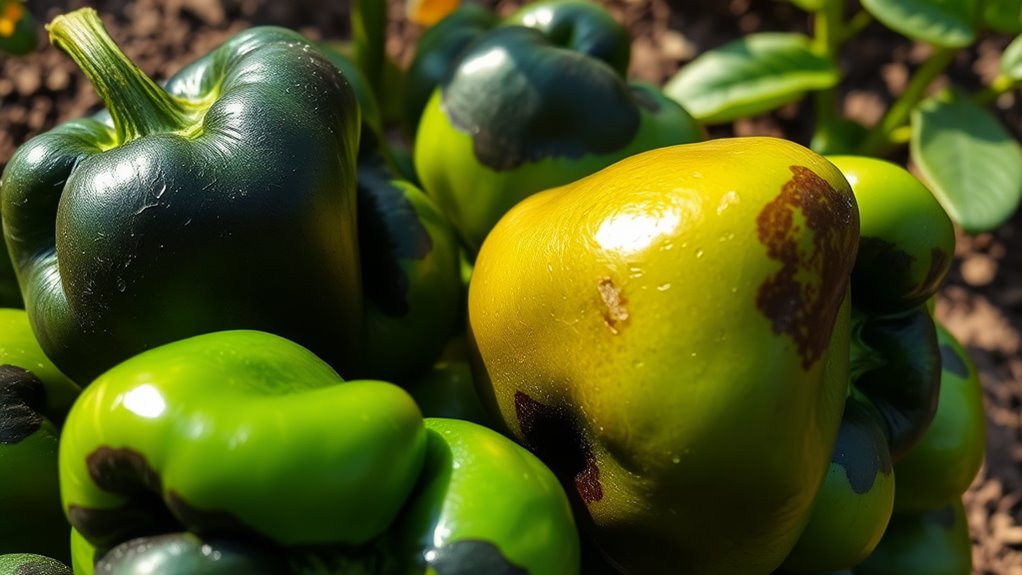
Peppers Turning Black. Here’s What It Means
Did you know that over 30% of pepper growers report issues with blackening fruit each season? This common problem can stem from various factors, including environmental stress and nutrient deficiencies. Understanding the underlying causes is crucial for effective management. As you explore the symptoms and treatments, you’ll uncover strategies to prevent these issues and ensure healthier pepper plants.
Key Takeaways
- Blackening in peppers may result from sunscald, causing dark patches on the fruit’s surface.
- Blossom end rot, linked to calcium deficiency and watering inconsistency, can also lead to blackened spots.
- Fungal infections, indicated by dark, sunken spots and fuzzy mold, can cause severe damage to peppers.
- Nutrient deficiencies, such as a lack of nitrogen or potassium, can manifest as blackened leaves or fruit issues.
- To prevent blackening, ensure consistent watering, use well-draining soil, and select disease-resistant pepper varieties.
Common Causes of Blackening in Peppers
Blackening in peppers can occur due to several factors, primarily environmental conditions and disease.
You might encounter pepper problems like sunscald, where intense sunlight causes black patches, or blossom end rot, linked to calcium deficiency and inconsistent watering.
High humidity can foster conditions for bacterial infections, leading to blackened tissues.
Additionally, over-fertilization can result in nutrient burn, manifesting as blackened areas.
It’s crucial to monitor your plants’ growing conditions, ensuring proper watering, adequate sunlight, and balanced nutrition. Proper plant care is essential in preventing these issues from occurring.
Identifying Symptoms of Fungal Infections
When peppers exhibit unusual discoloration or texture changes, it’s important to consider the possibility of fungal infections.
Look for signs like dark, sunken spots or fuzzy mold growth on the surface.
These symptoms often indicate specific pathogens, such as Botrytis or Phytophthora.
You may also notice wilting leaves or stunted growth, suggesting systemic infection.
Check for a slimy texture, particularly at the stem, which can signal advanced decay.
If you observe any of these symptoms, timely intervention is crucial.
Isolate affected plants and consider applying fungicides or removing them to prevent the spread of the infection to healthy plants.
Proper growing techniques can also help improve the overall health of your bell pepper plants, making them more resilient to diseases.
Nutrient Deficiencies and Their Impact
Nutrient deficiencies can significantly impact the health and productivity of pepper plants, leading to various physiological symptoms. For instance, a lack of essential nutrients can cause blackening of leaves, stunted growth, and poor fruit development. By understanding these deficiencies, you can take steps to address them effectively. Additionally, companion planting can enhance nutrient availability and improve overall plant health, helping to mitigate some of these deficiencies.
| Nutrient | Symptoms |
|---|---|
| Nitrogen | Yellowing leaves, poor growth |
| Magnesium | Interveinal chlorosis |
| Potassium | Curling leaves, fruit issues |
| Calcium | Blossom end rot |
| Phosphorus | Stunted growth, dark leaves |
Identifying these signs helps you maintain healthier pepper plants.
Effective Treatment Options for Affected Peppers
To restore the health of your affected pepper plants, it’s crucial to implement targeted treatment strategies that address the specific nutrient deficiencies identified.
If nitrogen deficiency is present, apply a balanced fertilizer high in nitrogen.
For potassium issues, consider using a potassium-rich supplement like greensand.
If calcium deficiency is evident, you might want to incorporate lime or gypsum into the soil.
Regularly check soil pH and adjust as needed to enhance nutrient availability.
Additionally, ensure consistent watering practices to prevent stress, which can exacerbate blackening.
Monitor for pests and diseases, as these can further complicate recovery efforts. Furthermore, common mistakes such as over-fertilizing can lead to nutrient imbalances that worsen the condition of your pepper plants.
Preventive Measures for Healthy Pepper Growth
Implementing preventive measures is key to ensuring healthy pepper growth and avoiding issues like blackening.
Start by selecting disease-resistant varieties suited to your climate.
Maintain optimal soil pH levels between 6.0 and 6.8, and use well-draining soil enriched with organic matter.
Water consistently, ensuring the plants receive about an inch of water weekly, avoiding both drought and overwatering.
Monitor for pests and diseases regularly, applying organic pesticides as needed.
Additionally, practice crop rotation to prevent soil-borne diseases.
Lastly, provide adequate spacing and airflow to reduce humidity, minimizing fungal issues that contribute to blackening.
In addition, regularly testing your soil can help identify acidic soil signs, allowing you to make necessary adjustments for optimal pepper growth.