Why Your Indoor Plants Keep Dying-and How to Fix It
If your indoor plants keep dying, it’s time to examine a few key factors. Insufficient light, overwatering, poor soil, pest infestations, and temperature issues can all contribute to plant decline. Understanding these elements is crucial for nurturing healthy growth. But don’t worry; you can turn things around. Let’s explore effective strategies to ensure your plants thrive, starting with the light they need.
Key Takeaways
- Assess light requirements and reposition plants to ensure they receive adequate bright, indirect light for healthy growth.
- Monitor watering habits; check soil moisture before watering to avoid overwatering or underwatering.
- Use nutrient-rich, well-draining soil to support root health and prevent compaction.
- Regularly inspect for pests like aphids and spider mites, and treat infestations promptly with insecticidal soap.
- Maintain optimal temperature and humidity levels, keeping plants away from drafts and heating or cooling sources.
Insufficient Light Conditions
Have you noticed your indoor plants struggling to thrive? One common issue is insufficient light conditions.
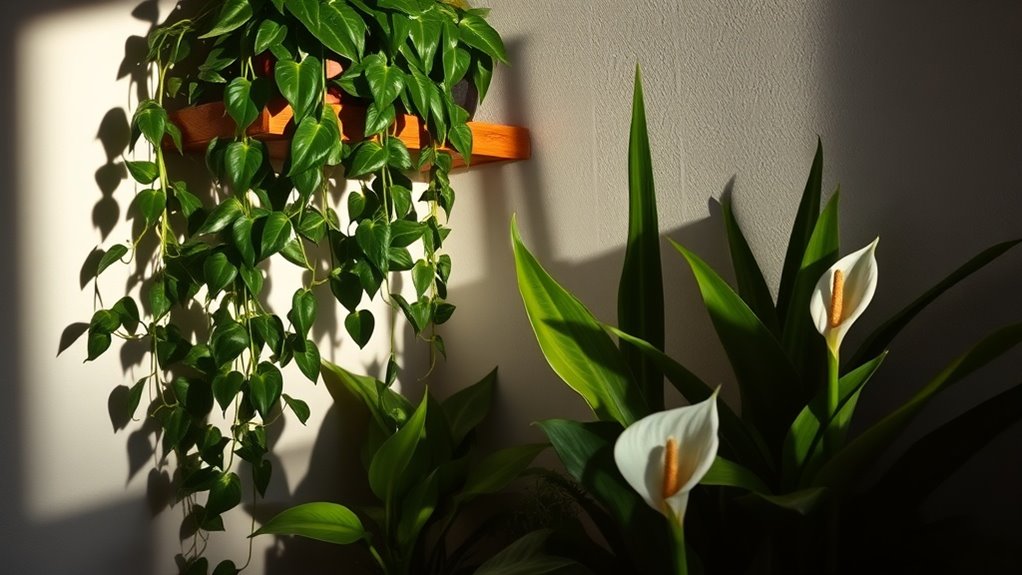
Most indoor plants require bright, indirect light to photosynthesize effectively.
If they’re too far from windows or blocked by furniture, they won’t receive enough light, leading to weak growth or yellowing leaves.
To improve indoor plant care, assess their light needs and reposition them accordingly.
Consider using grow lights if natural light isn’t sufficient.
Regularly rotate your plants to ensure even light exposure, promoting balanced growth.
Incorporating resilient low-light indoor plants into your collection can also help maintain a healthy indoor garden in less-than-ideal lighting conditions.
Overwatering or Underwatering
While ensuring your plants get enough light is vital, water management is equally important.
Overwatering leads to root rot, causing your plant to wilt and develop yellow leaves.
Always check the top inch of soil before watering; if it feels dry, it’s time to hydrate.
Conversely, underwatering results in dry, crispy leaves and stunted growth. Adjust your watering routine based on the season and humidity levels—plants typically need more water in warmer months.
Use pots with drainage holes to prevent excess moisture. Additionally, avoiding overwatering is crucial for maintaining healthy plants, as it prevents the buildup of stagnant water around the roots.
Poor Soil Quality
Soil acts as the foundation for your indoor plants, and poor soil quality can severely hinder their growth.
To ensure your plants thrive, consider the following factors related to soil quality:
- Drainage: Ensure your soil allows excess water to escape, preventing root rot.
- Nutrients: Use nutrient-rich soil that provides essential minerals for growth.
- pH Level: Test the soil’s pH; most plants prefer slightly acidic to neutral conditions. Signs of acidic soil can include yellowing leaves and stunted growth.
- Compaction: Avoid compacted soil, as it restricts root expansion and water absorption.
Improving soil quality can make a significant difference in your plants’ health and longevity.
Pest Infestations
Even with good soil quality, your indoor plants can still suffer if pest infestations go unchecked. Common pests like aphids, spider mites, and mealybugs can wreak havoc on your plants. Regularly inspect your plants and take immediate action if you spot any signs of infestation. Additionally, incorporating natural methods for aphid prevention can help maintain a healthier environment for your indoor plants.
| Pest | Symptoms |
|---|---|
| Aphids | Curling leaves, sticky residue |
| Spider Mites | Fine webbing, yellowing leaves |
| Mealybugs | White, cotton-like masses |
| Fungus Gnats | Small flies around soil |
| Scale | Hard, shell-like bumps |
Treat infestations promptly with insecticidal soap or neem oil for effective control.
Temperature and Humidity Issues
How can temperature and humidity affect your indoor plants?
Both factors are crucial for their health.
Extreme temperatures or low humidity can stress your plants, leading to wilting or leaf drop.
Here’s what to consider:
- Temperature: Most houseplants thrive between 65-75°F; too hot or cold can harm them.
- Humidity: Many indoor plants prefer humidity levels above 40%; low humidity can cause leaf browning.
- Drafts: Keep plants away from windows and doors where drafts occur.
- Heating/Cooling: Avoid placing plants near radiators or air conditioning units, as these can dry out the air significantly. Additionally, maintaining optimal humidity levels is essential for preventing common issues like leaf browning and promoting overall plant health.